

Indoor Gardens – The Next Kitchen Design Trend?
There is a growing trend (no pun intended!) towards eating fresh, locally-grown food. And there is nothing fresher than harvesting food from your own garden. Unfortunately, we live in a climate with a very short growing season and can only grow our own herbs and veggies a few months out of the year…. or can we? Enter the indoor garden.
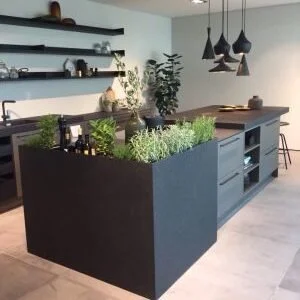
There is a growing trend (no pun intended!) towards eating fresh, locally-grown food. And there is nothing fresher than harvesting food from your own garden. Unfortunately, we live in a climate with a very short growing season and can only grow our own herbs and veggies a few months out of the year…. or can we? Enter the indoor garden.
In addition to being organic and delicious, plants improve our indoor air quality, and a connection with plants improves our mental well-being. But in the past the idea of an indoor garden may have conjured up images like this:

Doesn’t exactly blend with your decor does it? Not to worry – there are plenty of options that will not only enhance your decor, but are actually a focal point.
Indoor garden technology
In case you are doubting whether growing indoors is a trend, there are a number of companies actively developing technology to capitalize on this opportunity.
Always on the leading edge of design trends, IKEA has recently developed an indoor gardening kit:

Unfortunately the KRYDDA/VÄXER grow kit will not be available in Canada. (Interestingly as I was writing this last week IKEA also released open source designs for a garden sphere that feeds a whole neighbourhood)
The Urban Cultivator appeared a few years ago on Dragons Den and is now fairly widely available. The benefit to a system like this is that it has a built-in light and watering system, so requires very little effort on your part.

There are a few other growing systems I have come across, some of which are just in the process of launching:
The Organiponic System, which is available as a wall-hung or tabletop unit:

And the Vertical Green Plug & Plant, which has built-in sensors that allow your plants to communicate with you via your smartphone and let you know whether they are receiving enought light and water. Pretty cool, right? If you’re interested in one of these you can put your name on a waiting list for when it becomes available.

Indoor gardens as a design feature
But what really fascinates me is how to incorporate an indoor garden as a design feature. SieMatic has some great examples of built-in planters – the photo at the top of this post is a SieMatic kitchen and here is another example:

Similarly, you could incorporate planters into your island, such as in this kitchen by Jamie Blake of Blakes London:

In both of these examples, the planter could also be used as an ice tub, or to store things like oils and vinegars (in case the home growing thing doesn’t work out for you).
Vertical gardens are all the rage. If you have a lot of room you could fill a whole wall:

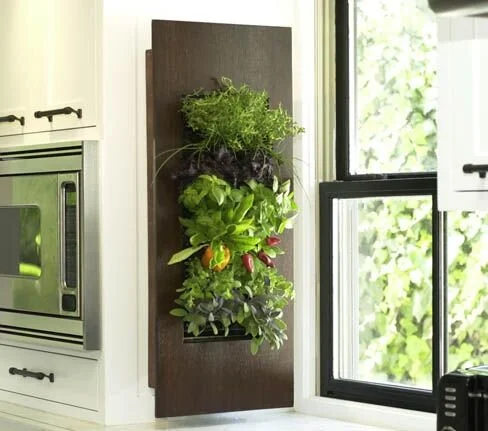
But if your space is more limited, try a wall-mounted planter such as this one from Bright Green:
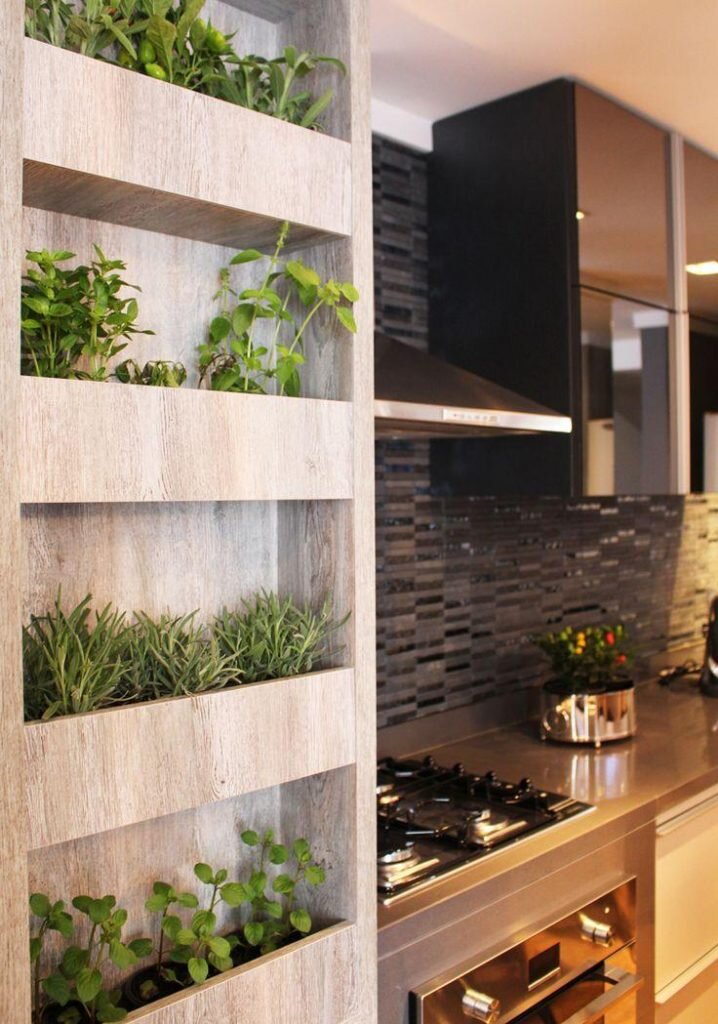
Or if you’re handy and like a rustic style, you could create a DIY herb garden like this one by Studio N2:

Another way to feature an indoor garden into your kitchen design is to build it into your cabinetry. Here are a few examples:

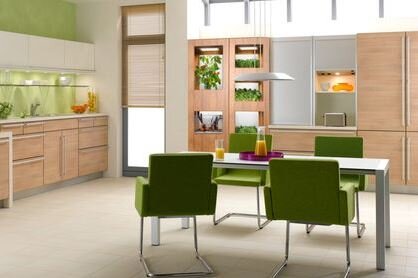
Indoor garden cabinet by Grove
But if you’re not quite ready to fully commit to growing your own food and just want to give it a whirl, you can create a beautiful but less permanent garden with decorative pots and planters:

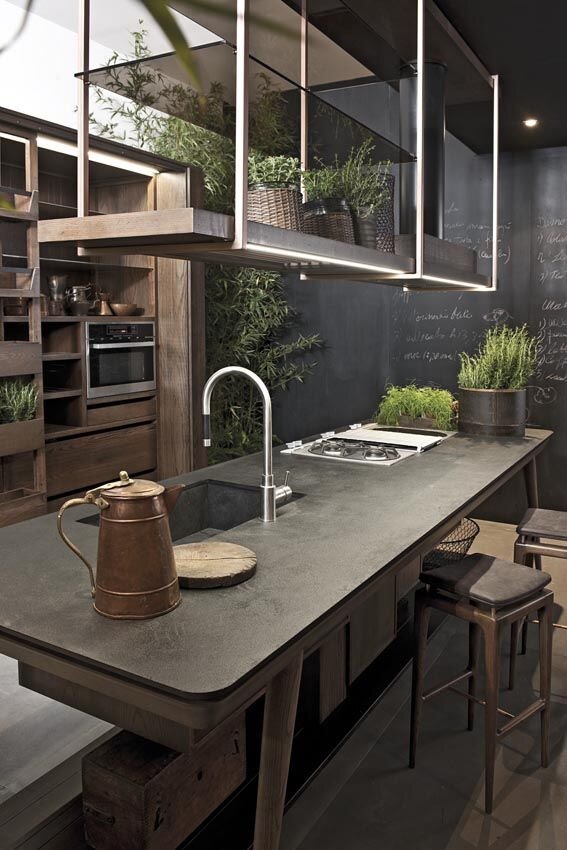

Photo: Celina Germer
What plants can I grow?
So now that you’re excited about the prospect of growing your own food, here are a few plants you can try:
Herbs are some of the easiest plants to grow. Things like basil, parsley, oregano, thyme, cilantro and rosemary are not only good candidates for an indoor garden, but are useful in many dishes
Many vegetables grow well indoors and don’t take up much room – for example lettuce, baby carrots, baby spinach, radishes, and green onions. These also grow quickly, and can be harvested in as little as 30 days.
Microgreens are basically the same as an herb or vegetable – they just haven’t fully matured. Microgreens are great in salads, on sandwiches, and even in smoothies (think wheatgrass)
Check out this article for a list of some of the vegetables you can grow indoors.
Ensuring your indoor garden is a success
There are a few keys to making sure that your garden will grow:
Light is one of the most important elements for plant growth. Plants needs as much as 14-16 hours of light, so they will need to be placed either near a window or skylight. In the absence of natural light, you may need to consider a grow light. An important design consideration will be how to incorporate this into your decor so as not to be an eyesore, especially since it needs to be placed within a few inches of your crop
Water & humidity – plants can suffer from both underwatering and overwatering. If you’re not sure whether you will remember to water, you could look at investing in an automatic drip watering system. In our dry Alberta climate, it is also a good idea to mist the plants regularly to maintain humidity.
Soil & drainage – use a good potting soil that will hold moisture, and provide proper drainage so that water does not collect at the roots of the plants
Fertilizer – plants need to be fed just like we do, and indoor plants need extra nutrients, so be sure to fertilize regularly
Temperature – maintain a relatively stable temperature in your home and do not place your indoor garden next to a heat vent
Above all, you must be willing to put in some time and effort if you want your garden to be a success. But the reward of fresh herbs and veggies will be worth it.
For more ideas and advice, check out our Pinterest Board. Or if you would like to create a kitchen with an indoor garden, email us or give us a call – we would love to help!
– Jolanda Slagmolen-Flores, AKBD

How to Solve Your Laundry Room Frustrations
Do you have one of those laundry areas in a dingy, unfinished basement? Or do you perpetually have a big pile of dirty clothes on the laundry room floor, waiting to be sorted and washed?

Do you have one of those laundry areas in a dingy, unfinished basement? Or do you perpetually have a big pile of dirty clothes on the laundry room floor, waiting to be sorted and washed?
I believe the state of your laundry room is directly correlated with your feelings towards doing laundry, and that laundry rooms no longer need to be unpleasant places to keep behind closed doors. Whether you are looking to create a place where you will enjoy doing laundry, or just make it bearable, the following pointers will help you to create a beautiful, well-organized space.
1. Sorting area
The fact that any well-organized laundry room should have a system for sorting is a no-brainer, but you may be pleasantly surprised at the many options available for sorting your soiled garments.
If you prefer open storage, how about shelves with some pretty bins or baskets:
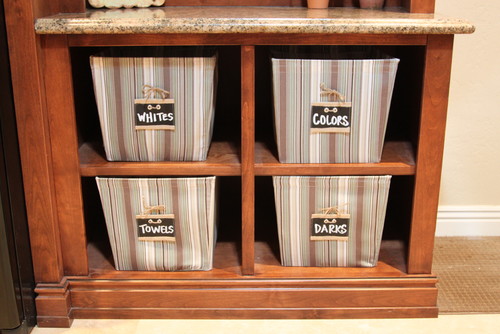
Or the old standby – neat and practical canvas bags:

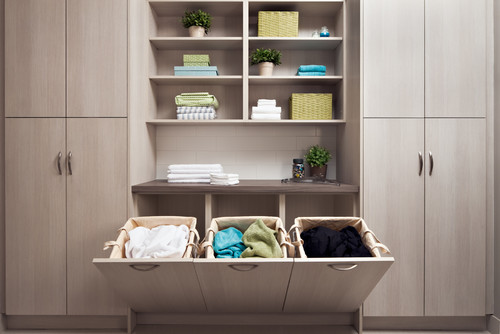
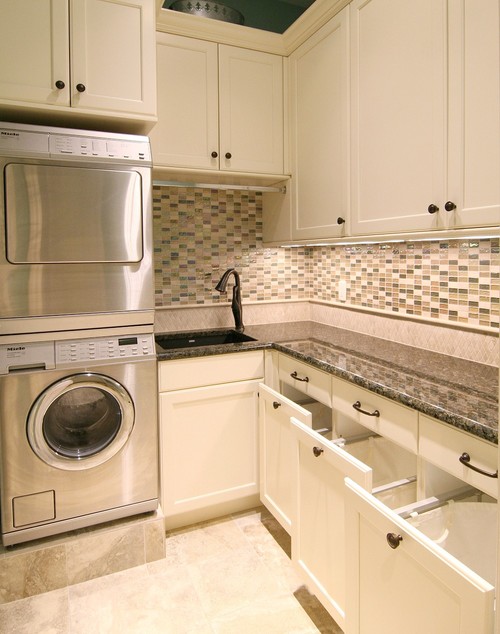
But if you like to keep things hidden, the good news is that there are now innovative accessories that allow you to incorporate hampers into your cabinetry:
2. Drying Racks
I’m a dryer kind of girl – my preference would be to throw everything in the dryer and not have to worry about hanging anything up to dry. But let’s face it – certain things just shouldn’t be put in the dryer (I learned that the hard way). Having spent years putting up with one of those folding racks taking up space in the middle of my laundry room floor, I am thrilled with some of the options available now that are so much more space-friendly.
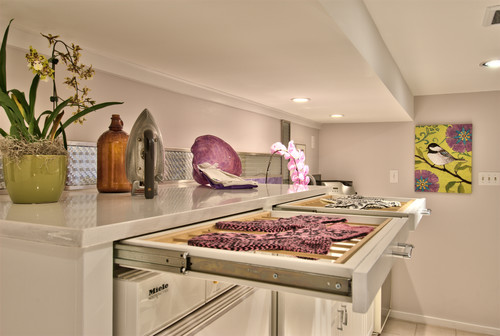
These slide-out drying racks are one great alternative:
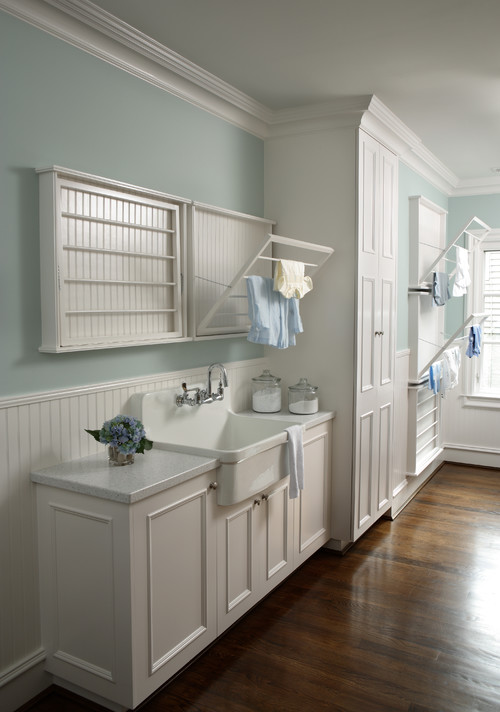
These fold-out ones are another favourite of mine:
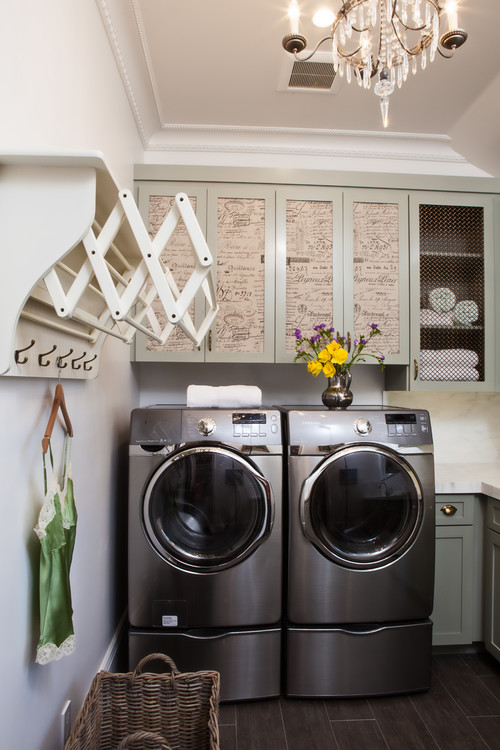
Last year we built a laundry room for a client and she had a retractable drying rack that I thought was really cool. When you’re not using it, it folds away and sits inconspicuously on the wall:


Here is a similar concept:
Or you could hide them away completely, such as in this specially built drying cabinet (we built something similar for a client a few years ago):

3. Ironing/folding area
Do you iron and fold your laundry in the laundry room or do you take it to another part of the house? Perhaps you have practiced this style of interior decorating? (I know I have):

When you have one of those dingy basement laundry rooms, you really don’t want to spend any more time there than you absolutely have to. But now that you are going to have a bright new organized laundry room you are going to want to spend more time there. Let’s keep the laundry where it belongs and set yourself up properly with an area for folding and ironing.
If your space is limited, you may need to use the counter over the washer and dryer. Many people find this too high however – ideally you want something about kitchen counter height. While most laundry rooms aren’t large enough, I just love the the folding table in the laundry room:

Source – Pinterest
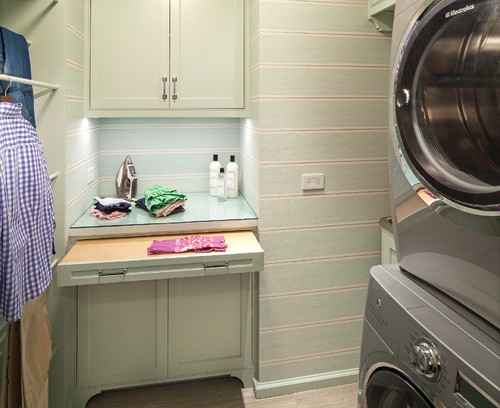
On the other hand, you may be really tight for space and need to squeeze out extra space wherever you can. How about this slide-out folding area:
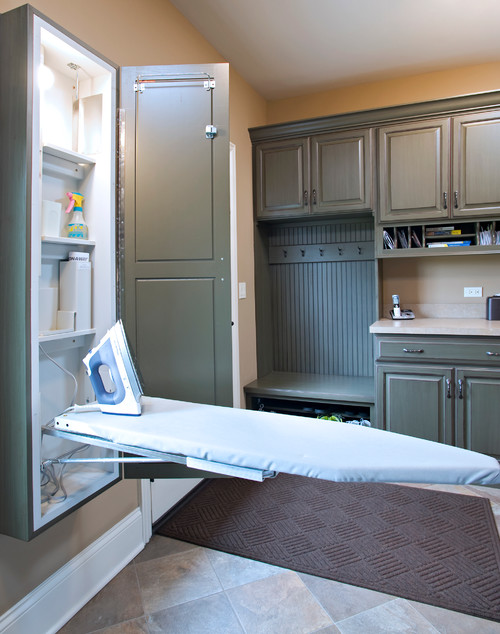
Closely related to folding is the task of ironing. Now, who wants to pull out a clunky old ironing board and set it up, especially if you are tight on space? There are a couple of space-saving options.
Here is one that folds down from a cabinet on the wall:
This one hides away in a drawer:

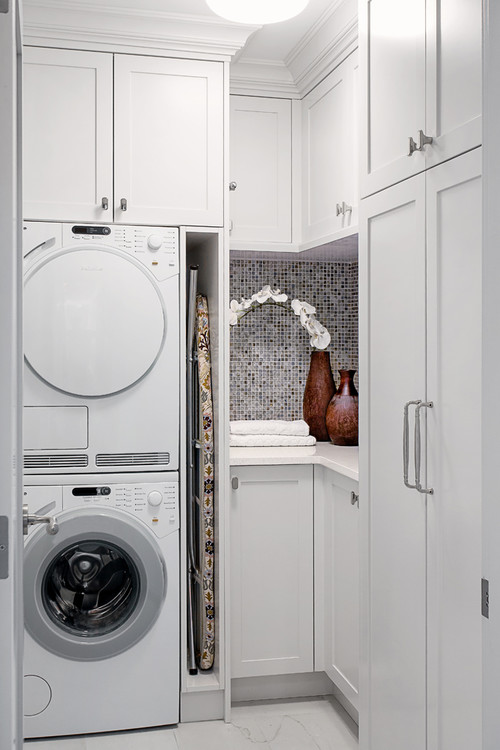
Or if you really can’t imagine parting with your traditional ironing board, then consider finding it a home where it can be tucked away out-of-sight:
4. Bright and happy décor
Finally, in order to really enjoy your laundry room and want to spend any time there at all, it needs to be bright and the decor needs to be inviting. I love the clean, white look of this laundry room:

Source: Pinterest
But it’s your space so make sure it reflects your style. If you like darker wood tones, maybe this will catch your eye:

Or for those who like a more modern look:

Just make sure it reflects you and your style, and is someplace where you will actually enjoy spending time (even if you may not necessarily enjoy what you’re doing!). We built this laundry room for a client who loved warm, earthy tones, which was reflected throughout her home. This laundry room incorporates most of the elements discussed above – there are open shelves for the the hampers, pullout drying racks (above the hampers and above the washer/dryer), a hanging rod for for drying, and a countertop for folding. But above all it reflects the client’s personal style and makes laundry a more enjoyable task for her. (Note the TV on wall too. Love that! Might as well be entertained while you’re ironing, right?)

Photo by Casa Flores Cabinetry

Photo by Casa Flores Cabinetry
A few final ideas
In parting I wanted to share another laundry room that we built for designer Suzette Toews a few years ago, which has some features that I absolutely love. It has a French Country flavour, with little decorative touches like the custom fabric valance over the window, the apron sink, and the decorative toekick on the sink cabinet. It really doesn’t look like a laundry room at all, does it? It’s so inviting.

Photo by Casa Flores Cabinetry
It has great storage accessories too:

Photo by Casa Flores Cabinetry
But my favourite part is the built-in washer and dryer! Seriously – how would you even know this is a laundry room?

Photo by Casa Flores Cabinetry
Do you need help solving your laundry room frustrations? We’d love to help. Call or email us today to book your free in-home consultation.
– Jolanda Slagmolen-Flores, AKBD

The House that Love Built – An Accessible Home for Kadence & Addison
This is a story about what can happen when a community comes together to help a family that is facing challenges beyond anything they ever imagined….
Let us introduce you to Shanna Leavitt and her two daughters, Kadence and Addison.
In May of 2015, life threw them a curveball…

This is a story about what can happen when a community comes together to help a family that is facing challenges beyond anything they ever imagined….
Let us introduce you to Shanna Leavitt and her two daughters, Kadence and Addison.
In May of 2015, life threw them a curveball. Both girls were diagnosed with a rare genetic disorder known as Friedrich’s Ataxia (FA). FA is a genetic disease causing progressive damage to the nervous system. It leads to impaired muscle coordination that worsens over time. Additional symptoms and side-affects include heart conditions such as cardiomyopathy, type 2 diabetes, speech problems, and vision impairment, and eventually leads to wheelchair dependency. It affects only 1 in 50,000. Worst of all, there is no cure.
Suddenly their days were filled with therapies of all kinds – eye therapy, physiotherapy, myofascial therapy (for swallowing and speech), massages and chiropractors. Not only that, but Shanna, a single working mom, now had to prepare special meals for the girls, give them daily massages, and carry them up and down the stairs of their two-storey home.
Then this happened…
An angel investor stepped forward and purchased a bungalow for Shanna and the girls, and offered to carry the mortgage until the new home could be renovated.

Kadence & Addison’s new home before renovations
Here was an amazing opportunity to create a safe and accessible home for Kadence and Addison. But how to pay for the necessary renovations? Here’s where things really got amazing….
People began to step forward with offers to help – friends, businesses, tradespeople – who all wanted to donate time and materials to renovate the family’s new home.
And here’s where we entered the picture
Casa Flores General Manager Jolanda Slagmolen-Flores first heard of the project in December 2015 when the family’s story was featured in the media. As a company involved in the renovation industry, she knew that we could do something to help, so she immediately emailed to offer assistance.
Initially, we thought we’d be able to help by donating a portion of the cabinetry if we could get some of the materials donated. However, when we approached our suppliers they came back saying they would donate all of the materials! We were truly overwhelmed by the response. Our amazing team of employees then stepped forward and volunteered their time to build the cabinets. As a result, we were able to donate all of the cabinets needed in Shanna and the girls’ new home.
A quick shout-out to the suppliers who contributed:
Multiwood (multiwood.com) – donated all cabinet doors (and they, in turn, got the materials donated by their supplier, McKillican)
Formations (formationswood.com) – donated all materials for the cabinet boxes (and they also split the donation with their supplier – Specialty Laminates)
Marathon Hardware (marathonhardware.com) – donated all drawer slides and handles
Jeco Finishing (jecofinishing.com) – donated the cabinet staining/painting. Their staff also volunteered their time to make this happen, with all paint and stain donated by E. Roko Distributors
Marc Jusseaume, Majestic Woodwork – volunteered to install all of the cabinetry
Nix Repair – took care of the cabinet touch-ups before the big reveal
Our Team Gets to Work
One of our designers had a keen interest in universal design, and she made it a personal concern that Kadence and Addy have an accessible home that would allow them to be able to be as independent as possible.
Our shop staff then volunteered countless hours to cut all the parts. On Saturday, May 28 we had a “build day” – our entire team, including our office staff and even family members spent the day building cabinets. It wasn’t all work – we BBQ’d, had some drinks and shared some laughs.


Install Day
This was truly a labour of love.
Here is what greeted us when we arrived to install the cabinets. Aaaawwww….


Big shout-out to Marc Jusseaume who volunteered to install ALL of the cabinets.

And of course our own team of cabinetmakers

Drew, Andrew, Alesha & Humberto
The Big Reveal
August 15 was the day of the big reveal! The family had no idea what had been taking place inside the house. In the tradition of “Extreme Home Makeover” a bus was brought in to hide the renovated house until the family arrived. Excitement was in the air!

Finally Shanna, Kadence, & Addison arrived in a limo provided by Ambassador Limousines. The crowd shouted “Move that bus!” and the family was able to see their new accessible home for the first time
Kadence & Addison’s New Accessible Home
The newly renovated home will give Kadence and Addison the maximum amount of independence possible, not only now but also as their condition progresses.
The elevator was a big hit with the younger crowd!

But much more than a fun feature, the lift will allow the girls to be mobile in their own home. Other features include a wheelchair ramp into the home and durable vinyl floors that make it easy to get around in a wheelchair.
The kitchen was custom-designed and built by Casa Flores using the concept of universal design. This means that it meets the needs of all users, both able-bodied and those in a wheelchair. There are different counter heights for the girls and for their mom Shanna. The sink and cooktop are both open underneath, allowing a wheelchair to roll underneath, and the oven and microwave are placed down low. The girls love to cook and bake, so these were important features. There is also lots of under counter storage for food, dishes, glasses, etc.
In the girls’ bathroom, there is a roll-in shower and the vanity is open underneath with a lowered countertop.
But this renovation wasn’t just about the practical stuff. Everyone put their heart and soul into creating a beautiful home for this family. From the landscaping to the decor, there are many beautiful features and fun touches for the girls. Here are some photos of the finished home:

The kitchen is both functional and beautiful.

The cabinet under the cooktop rolls out to allow wheelchair access and the oven and microwave are lowered for the girls.

Different counter heights make the kitchen accessible to both able-bodied users and those in a wheelchair.

The sink is open underneath to allow for a wheelchair.

Shanna’s bathroom – a mom needs a place to relax!

The girls’ bathroom features a roll-in shower and a vanity that is open underneath.

The girls love horses! The bedrooms are a little girl’s dream.

Love this tile in the basement bathroom!

The house is beautiful both inside and out.
We are so grateful to have been a part of such a special project. We hope that Shanna, Kadence, and Addison will enjoy many happy years in their new home!

Home Office Design: 6 Great Layouts
Are you converting a spare room into an office and looking for some home office design layouts? Keep reading for some great home office configuration ideas.
So you have a room that you would like to convert to a home office… Maybe you have a spare room in the basement, or maybe one of your kids has just left home and you are …

Are you converting a spare room into an office and looking for some home office design layouts? Keep reading for some great home office configuration ideas.
So you have a room that you would like to convert to a home office… Maybe you have a spare room in the basement, or maybe one of your kids has just left home and you are reclaiming their room as your own. In any case you have a blank slate that may look something like this:
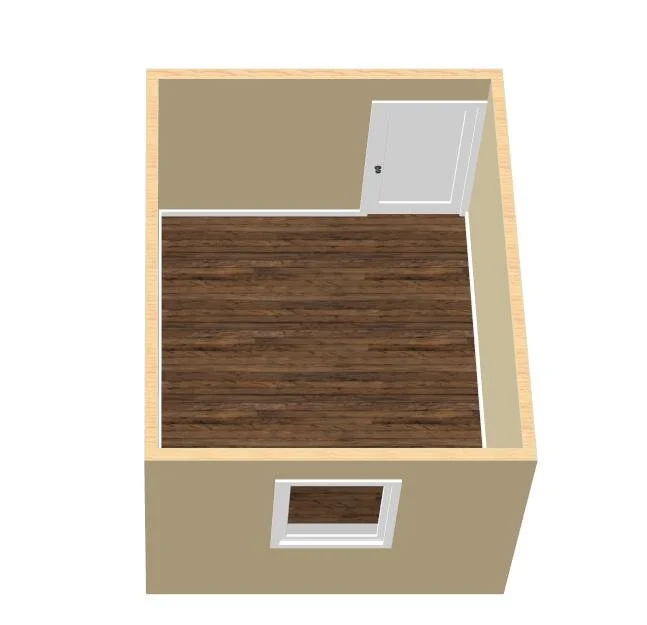
This is a fairly typical room, approximately 10ft x 12ft, although if you have a closet it will restrict your wall space a bit. But even if it doesn’t look exactly like this, we want to give you a few ideas for layouts, and hopefully get you thinking outside the box a bit (and give you some pros and cons of each!)
One-wall home office design

At first glance, it appears that this layout doesn’t make the most of the available space. However this layout does have some benefits – it can allow for two or three people to work comfortably in the same space:
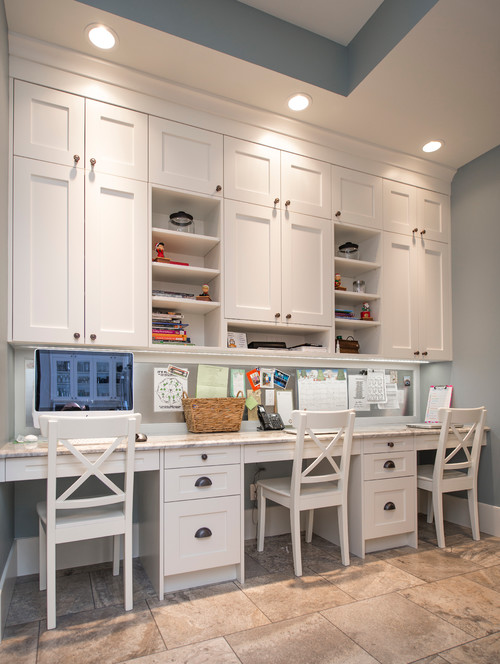
The empty space could be used for a bookcase or cozy chair or daybed for reading. Or, if this space is doubling as a guest room, then a wall bed could be incorporated in the centre. The open space allows the wall bed to fold down:

One-wall home office design with a freestanding desk or work table
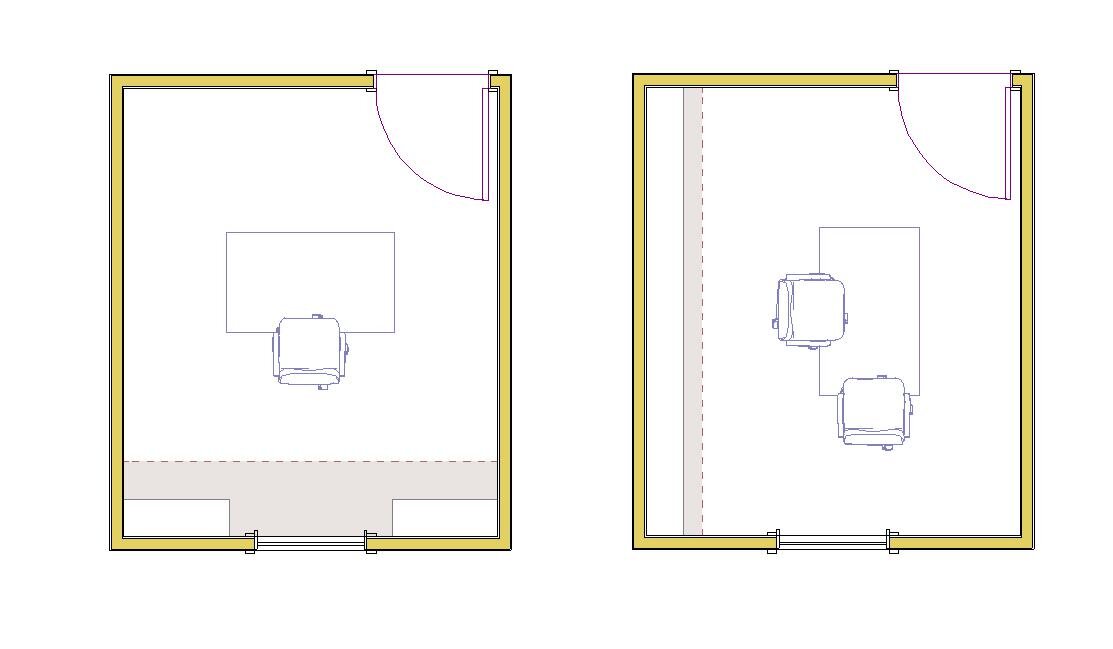
There are a couple of variations on this layout, depending on how the space will be used. There could either be a free-standing desk:

Or if you are looking for something a little more casual (perhaps the room doubles as a craft room), here is a similar idea with a work table that people can gather around:

Remember that if your computer screen faces the window you will get a lot of reflection and glare, so good window coverings will be key.
L-shape home office design

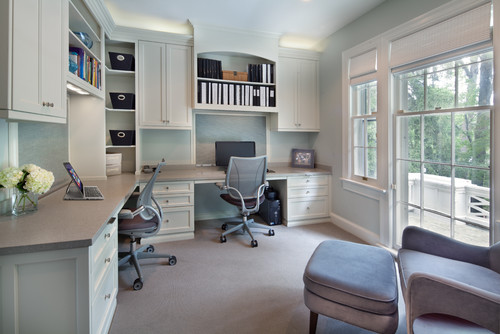
This option offers plenty of space for one or two people to work, although they both face the wall, which some people dislike. (Interesting trivia: according to the ancient Chinese art of feng shui, facing the wall blocks your progress, and having your back to the door leaves you open to being stabbed in the back).
But if you’re not superstitious then this layout can be very inviting:
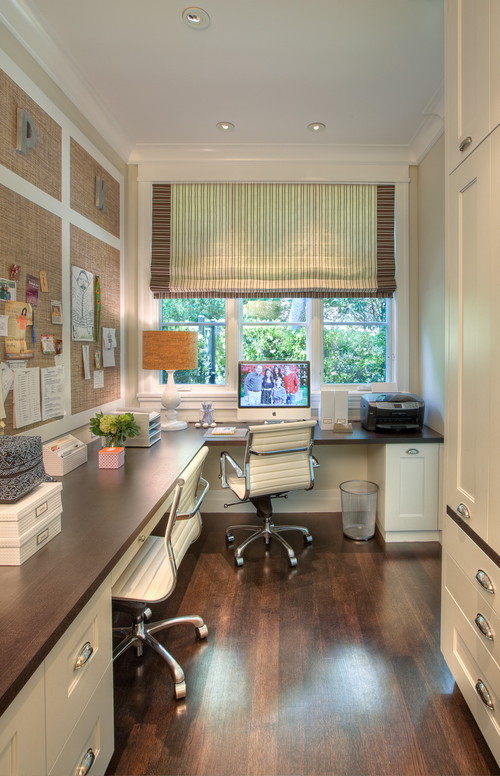
And can be especially nice if the window is low and you have a nice view outside:
U-shape home office design

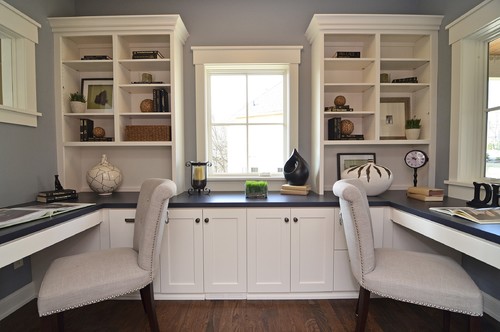
This configuration uses every inch of available wall space! To keep it from looking too heavy, be sure to maintain some open space – don’t fill every square inch with cabinets:
T-shape home office design

This is an improvement on the one-wall design in that it offers extra storage space for both users. The peninsula in the middle can house file drawers or perhaps a shared printer. If two people will be facing each other then the centre of the “T” should be wider to ensure there is enough space for both.
Here are some great inspiration photos for this layout:
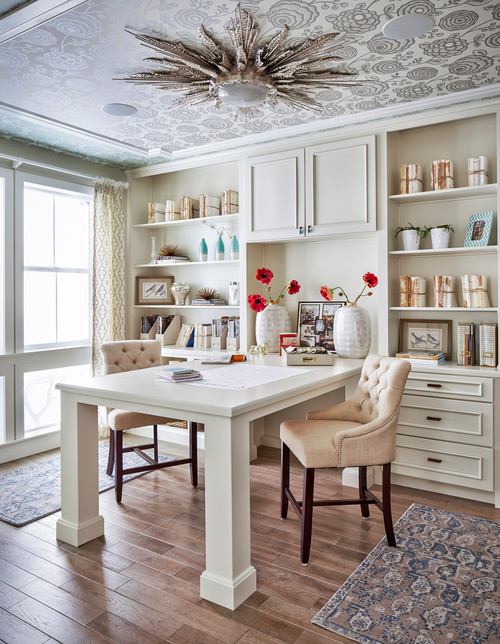


Reverse L-shape home office design

Last but not least, the reverse “L” is a great layout if you will be meeting with other people in your office.

Pink Little Notebook
For more inspiration, check out our Houzz home office ideabook, or our home office Pinterest Board:
http://www.houzz.com/ideabooks/35291996/thumbs/home-offices
https://www.pinterest.com/casaflorescabs/working-in-style/
Or, if you would like us to create a home office for you, contact us for a complimentary in-home consultation.

6 Essential Kitchen Storage Accessories
Kitchen renovations are by far one of the most popular home improvements. Not only does a kitchen remodel offer one of the highest returns on investment, but as one of the most utilized spaces in your home, your new kitchen will provide you with enjoyment like no other home improvement.

Kitchen renovations are by far one of the most popular home improvements. Not only does a kitchen remodel offer one of the highest returns on investment, but as one of the most utilized spaces in your home, your new kitchen will provide you with enjoyment like no other home improvement.
There are many aspects that contribute to a well-designed, functional kitchen, but high on the list of priorities should be practical kitchen storage accessories. Trust me when I say that you don’t have to be an obsessive organizer to find peace and tranquillity in a well-organized cutlery drawer!
There are definitely some “must-have” kitchen storage accessories to consider for your remodel. Considering all the money you are going to spend on cabinets, countertops, etc, why skimp on the things that will bring you to a state of organizational bliss?
1. Drawer organizers.
Top of the priority list! The best drawer organizers are those that are cut to exactly fit. A cutlery organizer is a no-brainer, but also consider a utensil organizer for your cooking utensils, and a spice drawer organizer so that you can find your herbes de provence without having to rifle through a bunch of little jars on a shelf.
2. Pantry storage.
Typically a pantry will be 24” deep and contain lots of boxes, bags, and cans. Trying to find that bag of brown sugar at the back, behind the flour, baking powder, white sugar, etc, etc can be a true pain in the behind. My favourite solution is a pantry pullout with the cabinet door attached. You pull on the door and pull out the full contents of your pantry, visible and accessible on both sides. Another option would be roll-out trays, which are basically drawers inside your pantry that allow you to pull out the contents shelf-by-shelf so as to reach the items at the back.
3. Pullout garbage/recycling.
Gone are the days of keeping a small garbage can under your sink (small because there is not much room with all that plumbing) and a recycling bin by your back door. Now you can quickly and easily dispose of all of your recyclable and non-recyclable waste. A pullout bin system strategically placed in your clean-up area (I like to put it on one side of the sink, with the dishwasher on the other) means you can conveniently dispose of your food scraps and empty boxes, bags, and cans while you work in your kitchen. And everything stays clean and hidden away.
4. Pullout storage in base cabinets.
Have you ever had to get on your hands and knees to dig around for your slow cooker in the back of one of your bottom cabinets? Bad for your knees and your back, not to mention your frustration level. The roll-out tray concept is a great option here again. I have a base cabinet with all my small appliances on two roll-out trays. I simply pull them out and have easy access to everything I need.
5. Corner storage.
Another example of a cabinet that often forces you to get on your hands and knees and dig around for things. Lazy Susans are popular kitchen storage accessories, or for another really cool option, check out the options for blind corner pullouts.
6. Undersink storage.
Last but not least – you want to address that difficult area under the sink. With all the plumbing in the way, it is often difficult to utilize this space effectively. Thankfully there are some great undersink storage accessories that have been specially designed to fit around all those pipes.
Your new kitchen should not only look good, but also function well. Incorporating some of these essential kitchen storage accessories is sure to bring you mental peace and harmony.
(To see some of the storage accessories we have incorporated into our kitchen projects, have a look at our Houzz page)

Tips on How to Select Your Cabinetry
If you are contemplating a kitchen renovation, a major consideration will be the selection of the cabinets. There are many cabinet suppliers, each offering different types and quality of cabinets, and it can be difficult to compare products unless you know what you are looking for.

If you are contemplating a kitchen renovation, a major consideration will be the selection of the cabinets. There are many cabinet suppliers, each offering different types and quality of cabinets, and it can be difficult to compare products unless you know what you are looking for.
Different manufacturers have different construction methods, and most have a certain type of construction and materials they consider “standard” while other features are offered as “upgrades.” When comparing quotes, it is essential to know what is included in the price. Most of all, it is important to identify what attributes are important to you.
Here is a primer on cabinet materials and construction, and some of the elements that affect the quality and price.
Materials. The first thing to consider is what the cabinets are made of.
Most cabinetry sold today has a melamine interior, which is usually white. Some manufacturers may offer a melamine interior that looks like natural maple, for which they may charge extra. A more expensive option is for the cabinets to be built of plywood with a wood veneer such as birch.
If you have any cabinets with glass doors, you will probably want the interior of the cabinet to match the exterior. Having the interior finished matching the outside will usually cost you extra.
Visible parts of the cabinets such as exposed sides and the interiors of open shelves will match the colour and texture of the doors, but it is important to find out whether these parts of made of wood or melamine that mimics the look of wood. People are often disappointed to discover, when their cabinets arrive, that they are actually plastic on the outside, rather than real wood.
In general, though, you should be aware that the more wood used, the more expensive the cabinets.
Next look at what the drawers are made of.
The most common materials for drawers are melamine, plywood, solid wood, and metal. Again, you will pay a premium for wood. The cost of metal drawers varies depending on the system used. Melamine is offered as standard by many cabinet manufacturers and is a durable, affordable option.
Finally, consider the wood species used on the cabinetry, which affects the doors, mouldings, and usually any open shelves or exposed ends.
Maple is currently the most popular, but oak is making a bit of a comeback, albeit in darker tones and more contemporary door styles than those of the ’80s. Oak is also less expensive than maple and tends to be on par with woods such as alder and birch.
On the pricier end of the scale are woods such as cherry and walnut. For the environmentally conscious, bamboo is also available for significantly more money, and at a very limited range of suppliers.
Your designer or salesperson can help you decide which wood species is best for you. The most important characteristics to consider are the texture of the wood (grain, knots, colour, etc.) which will affect the overall look and style of the room, and the hardness or softness of the wood.
Of course, the other option is to not use wood at all, but rather a melamine imitation, as discussed earlier. Many economy-grade cabinets are available with boxes, doors, and mouldings that are made of MDF (medium-density fibreboard) covered in melamine or vinyl that mimics the look of wood.
Construction
Maple cabinets with solid wood doors and a dark finish.
The next element to consider is the way in which the different parts of the cabinet are constructed. Certain methods of cabinet construction are more time-consuming and therefore more costly than others.
Check to see how the cabinets themselves are constructed. Many cabinets are built today using special European assembly screws, which is considered a strong and reliable construction method. More traditional methods involve joining the parts using dowels or biscuits and glue. On the other hand, cabinets that are nailed or stapled together will be less durable.
Like the cabinet boxes, drawer boxes are made using different types and quality of construction. One well-known joint for drawers is the “dovetail,” which is considered one of the strongest joints in woodworking. However, you will pay more for this type of drawer, and other types of construction can meet your durability requirements.
Check, also, to see how the bottom of the drawer is attached, whether it is inserted into a groove on the sides of the drawer, or simply stapled to the bottom of the box.
Finally, the way the door is constructed will affect the cost of the cabinet. The primary door styles are flat panel, raised panel, and slab.
Most flat-panel and raised-panel doors are made of a solid wood frame with a centre panel. The difference between the two is that flat-panel doors have a 0″ thick veneer centre panel, whereas the raised-panel doors have a 0″ panel made of solid wood, and therefore cost more.
You can also purchase cabinets with MDF doors that have been routered to look like a flat-panel or raised-panel door.
Slab doors are simply flat. They may be made of solid wood, veneer, melamine or MDF. Unless they are solid wood, they will usually have an applied edge around the perimeter of the door. The important thing to look at here is the thickness of the edge – the thicker the edge, the more durable the door will be.
Hardware
The hinges and drawer slides are another important element to make note of.
Ideally, hinges should be six-way adjustable, meaning the door can be adjusted up and down, in and out, and from side to side. This will ensure that the doors can always be adjusted to look straight and square.
It is also convenient if the hinges have a quick-release mechanism, allowing you to remove the door if necessary, without unscrewing the hinges.
An upgrade offered by some suppliers is a slow-closing hinge, which causes the door to close slowly, and means that it cannot be slammed by excited children or angry spouses!
One of the most common drawer slides used is metal rails with nylon wheels. A higher-quality slide is one that uses a ball-bearing carriage system. You may also come across side-mounted ball-bearing slides. Some consider the side-mounted slides less attractive because, unlike under-mount slides, you can see them when you open the drawer. However, they are extremely durable and hard-wearing.
Many slides can be upgraded to full-extension, which allows the drawer to open past the front of the cabinet, allowing better access to the back of the drawer. Like hinges, drawer slides can also be equipped with a slow-close mechanism.
Stock Vs. Custom
Most cabinets sold at home centres and other box stores are what are known as stock cabinets. They come in a somewhat limited range of sizes and styles, which means that they may not offer all of the cabinet sizes, styles, or storage accessories you need.
Also available are semi-custom cabinets, which usually offer a wider array of sizes and accessories, and may allow you to customize the height, width, and/or depth of the cabinets, at a price.
A custom cabinet shop is most likely to be able to give you exactly what you are looking for. You may also find that the attention is more personal, and the price more affordable than you think!
How do I choose?
While people will argue which types of cabinets are “better,” the important thing is to identify the features that are important to you.
If superior quality is your main objective, you will want to focus on the construction and the hardware and materials used.
If cost is your primary consideration, you may opt for melamine cabinets with standard construction and hardware, and choose to forego decorative and storage accessories.
If you are after a specific “look,” you will want to focus on finding a supplier that can provide you with the door style, finish, and decorative accessories you want.
If function and organization matter most to you, look for a cabinet line or manufacturer that offers a wide array of storage options.
Finish
The last thing to note is the finish on the cabinets. As previously discussed, some cabinets are finished with a thermofoil or melamine, but the comments here relate to stained or painted finishes.
The cost of the finish will depend largely on the amount of work required to achieve it. So a clear finish will be the least expensive, whereas the dark finishes that are currently popular are often more costly because they usually require various layers of finish in order to achieve them.
An aged look can be obtained by physically distressing the cabinets (e.g rubbing the edges, or intentionally creating marks or dents). A glaze can also be applied over the primary stain or paint colour, which gives the impression they have been darkened or faded by age. These “antiqued” finishes are considered premium, as they are usually done by hand and require a considerable amount of time to achieve them.
Check the topcoat used on the cabinets. Ideally, it should be a catalyzed finish, in which a chemical reaction causes the finish to “cure” (or harden) rather than just dry.
Look for a supplier with knowledgeable designers or salespeople who can help you to identify which cabinets will be most suitable for your lifestyle and budget. Finally, be sure your supplier stands behind their product and will give you the level of service you deserve.

6 Great Ways to Sabotage Your Kitchen
It seems that everyone is renovating these days, and one of the most popular choices for a makeover is the kitchen. And for good reason – a kitchen renovation provides one of the highest returns on your investment and creates an immediate improvement in the look and comfort of your home.

It seems that everyone is renovating these days, and one of the most popular choices for a makeover is the kitchen. And for good reason – a kitchen renovation provides one of the highest returns on your investment and creates an immediate improvement in the look and comfort of your home.
Unfortunately, there are some common errors in judgment that many people make which can actually sabotage their kitchen – making it less functional and even costing more money in the long run.
1. Leaving your kitchen planning to the end.
In redesigning an existing kitchen, there are often factors such as windows, load-bearing walls, and building systems that limit the design. When building a new home, however, you have a wonderful opportunity to plan almost all these elements around your kitchen design (provided, of course, you are building the home yourself or with a custom home builder).
Sadly, many people build the house first, even installing all of their plumbing and electrical, before they plan their kitchen layout. At that point they discover that the sink would have worked better on the island, or that their stove should be moved over a few feet. As a result, they either end up compromising their design in order to accommodate the existing room layout, or making costly changes to the room in order to accommodate the design.
2. Installing expensive counters and flooring before replacing the cabinets.
New countertops and flooring are a great way to update your kitchen without having to do a complete demolition.
However, most high-end countertops such as granite and quartz are a long-term commitment.
Before making such a large investment, consider whether the existing cabinetry is in good shape and the layout efficient. If not, you may need to look at replacing your cabinets in the next few years.
Replacing your countertops with granite now will mean limiting your future design to the layout of your existing cabinets. Not to mention the expense involved in having the countertops removed and re-installed at a later date.
The same can be said for flooring. Laying a tile floor now will dictate the layout of your kitchen in the future (unless you’re prepared to tear it up).
Why not look at a less expensive option in the interim? Laminate countertops, for example, come in a wide range of colours and finishes, including some that look like granite or slate. They will make a huge improvement to the look of your kitchen for about a quarter of the cost.
3. Squeezing in an island.

The island has become a very popular addition to modern kitchens. With the trend to open concept homes, the island provides necessary preparation and even seating space, without creating a visual barrier.
Most new homes are designed to embrace this trend. However, an older home often requires major structural changes, or at least the demolition of some non-load bearing walls, in order to create an open-concept kitchen.
Unfortunately, many people believe that an island will fit within the existing walls of their kitchen, when in fact they do not have enough space.
Good kitchen design dictates that a work aisle (i.e. the space between your perimeter counters and your island) be at least 42″ wide.
There are countless homeowners, however, who want to squeeze an island into their kitchen and cannot understand why a work aisle of as little as 24″-30″ will not provide them with sufficient space.
These folks should get together with the homeowners that are desperate to get rid of their island! As they will testify, such a cramped space makes it extremely difficult to move around, or even just to open the fridge.
4. Putting form before function.
Of course, everyone wants their kitchen to look good, but sometimes too much attention to the look of your kitchen can take your focus off of making it function well for you.
For example, people are often so focused on achieving perfect symmetry that they will use narrow or difficult-to-access cabinets in order to keep their sink perfectly centered on their window. Balance and beauty can be achieved without symmetry!
The most important aspect of planning your kitchen is to do a thorough inventory of the items you need to store in your kitchen and to examine what activities take place there. Then make sure your first priority is ensuring that the cabinetry and layout will meet your needs.
5. Setting a fixed timeline.
As much as you will want to develop a detailed timeline for your kitchen renovation, the fact is that it is impossible to control every element, and despite your best efforts, your renovation will probably not go exactly as you planned.
There are many things that can hinder your renovation. The current shortage of skilled tradespeople means that your suppliers may have longer turnaround times. Shipping problems can also set back the arrival of your cabinets.
The worst thing you can do is to try and squeeze in a kitchen renovation prior to a big event. Any delays may cause you to cut corners or make compromises, in order to meet your deadline.
A kitchen renovation is stressful enough without this additional pressure and anxiety!
Be prepared for your renovation to take longer than anticipated. Leave enough time to deal with unexpected delays, so that you don’t end up making rush decisions and compromising on the features that are most important to you.
6. Doing it on your own.
There are so many options available today for cabinetry, countertops, flooring, fixtures, and appliances, that it can be difficult to know what to choose.
Kitchen planning can also be a complex process. There are a number of building codes that apply to kitchens, and numerous guidelines that have been developed for designing safe and functional kitchens.
An experienced kitchen professional can help you navigate through all of your options, and offer ideas and suggestions for creating a beautiful, and above all, functional, kitchen. Many cabinet suppliers and home improvement stores even offer this service for free.
Taking the time to think through your kitchen renovation, and seeking professional advice, will ensure that your project brings you years of enjoyment, rather than regret.

5 Variables that Affect the Price of Your Cabinets
There are many cabinet suppliers in Calgary and many different types of cabinets. It is important to understand the variables that affect the price of your cabinetry, as this will help you to identify what options are right for you, as well as compare “apples to apples” when comparing quotes from different suppliers.

There are many cabinet suppliers in Calgary and many different types of cabinets. It is important to understand the variables that affect the price of your cabinetry, as this will help you to identify what options are right for you, as well as compare “apples to apples” when comparing quotes from different suppliers.
There are five general areas that will affect the price of your cabinets:
Materials
Look at what materials are being used. Are the cabinet boxes made from melamine or a more expensive plywood? Are the drawer boxes metal, melamine, or solid wood? Are the doors made of wood or are they covered with melamine or vinyl? In the case of wood, you will find that more common species such as oak and maple will cost less than woods such as cherry or walnut, or more exotic species like wenge or zebrawood. Melamine or vinyl doors are often cheaper, and there are some amazing materials available today, that mimic the look and feel of wood.
Construction
Second, look at the cabinet construction. A face-frame cabinet will generally cost more than a frameless, European-style cabinet. Also, look at how the cabinet is put together. Are the parts joined using dowels and glue? Or is the cabinet screwed together? How are the drawer boxes built? A dovetailed drawer box, for example, will cost you more than one that is constructed using butt joints.
Hardware
Thirdly, look at the hardware that is being used, specifically the drawer slides and hinges. The least expensive drawer slide is a metal side-mounted one with little plastic wheels. Compare this to the higher end under-mounted steel slides. Many cabinet suppliers now also offer a slow-closing feature on both their hinges and slides, which causes the door or drawer to close slowly, rather than slamming shut. This is a nice feature, but it will cost you more.
When evaluating the hardware, also look at any storage accessories that are being included, such as pullout garbages, pantries, etc. What are they made of? Do they have a soft-close feature? Storage accessories vary widely in construction and price.
Door Style
Another variable that will affect the price of your cabinets is the door style. A flat panel door usually has a solid wood frame with a 1/4″ veneer centre panel, whereas a raised panel door has a solid wood panel, thereby making is more expensive.
A slab door (which is completely flat) is often the least expensive, but this depends on how it is made and what materials are used. Ask what the core of the door is made of – is it particle board or MDF? How are the edges finished? Does the door have a very thin veneer edge or a solid wood edge? In the case of a vinyl door, you should look at the weight of the vinyl being used. Be aware that glossy vinyl costs more than a matte.
Finish
The final element to look at is the finish. In the case of a wood door, a clear finish is generally the least costly, whereas a stain will cost more – generally the darker the colour, the more expensive the finish. If you are interested in an antiqued finish, be prepared to pay substantially more, as this is usually done by hand. Be sure to look at the insides of the cabinets also – check if open shelves and glass door cabinets have the same finish on the inside as on the outside, or if they are similar-coloured melamine.
My point here is not to tell you which materials, construction, hardware, etc. are better. Rather, you should look at the nature of your project and decide which options are most important to you. Are you building your dream kitchen, or are you looking for inexpensive cabinets for your laundry room? When working with a limited budget, what upgrades are you willing to pay more for? Are solid wood drawers important to you, or would you rather spend that money on the antiqued finish you love?
A custom cabinet supplier will be able to combine these variables according to your needs, and a good designer or salesperson will be able to suggest the options that best meet your needs and budget.